
H.B. Fuller already makes surgical glue. About $68 million worth, assembled by buying four smaller medical adhesive companies. This week the shareholders of a fifth, the British tissue-healing company Advanced Medical Solutions, approved a takeover valued at £715 million. AMS makes surgical adhesives, sealants and dressings. So does the buyer.
The chemistry was the cheap part
On an earnings call in June, H.B. Fuller CEO Celeste Mastin described the market she was buying into as one whose barriers to entry include "regulatory approvals, clinical validation and rigorous customer qualification." The offer announcement made the same point in fewer words, calling medical a core growth market for its "high regulatory-based entry barriers."
The barriers are the reason to buy. A manufacturer with its own formulation chemists, its own plants, and four prior acquisitions in this exact space looked at what it would take to grow a medical adhesives business out of its own labs, and decided £715 million was the faster road. Making the product was never what stood in the way.
The money points the same direction. AMS brings roughly $300 million in annual revenue, and H.B. Fuller is paying 12.9 times EBITDA before synergies, expecting about $55 million a year in combined revenue and cost savings by 2031. Some of that is the cost of running a public company going away. What the buyer cannot grow on its own schedule is the part AMS spent years accumulating: products already through their regulatory gates, and the clinical evidence sitting behind them.
A patent is a clock. A clearance isn't.
A patent is a clock, not a moat. It buys a defined window, and the only thing that window is good for is building something behind it that doesn't expire on a date your competitor can read as easily as you can.
More than a decade ago, maybe closer to fifteen years, I worked on a University of Nebraska Medical Center project that built a navigated sagittal saw for preparing bone to take a knee implant. Nearly every bone-shaping robot at the time used a burr, which grinds material away. Our claims were built around cutting planes instead. I went to Washington and walked a patent examiner through why cutting a plane with a saw and destroying material with a burr are different operations that produce different results. He agreed. The patents issued to the university, and I managed them.
Then the company didn't push it forward. Tick tock. The patents drifted toward expiry, and Stryker now ships Mako RPS, a handheld robotic saw for total knee replacement that does the job better than our version ever did. Somebody read the expiration date and built the better product for the day after.
The H.B. Fuller deal prices the difference between those two kinds of asset. A patent runs out on a schedule anyone can look up. A clearance doesn't lapse because a calendar says so, a clinical data set doesn't stop being evidence, and a hospital that has already qualified you as a supplier doesn't hand your competitor that status for free.
Who this is for
This applies to any founder whose product needs a regulator's sign-off or an institutional buyer's qualification before a single unit ships. Medical devices and diagnostics, plainly. Also defense hardware moving through test and evaluation, grid equipment facing utility interconnection review, and industrial robots that have to clear a plant's safety qualification before they go near a line.
It's easy to staff that work as a compliance function and park it off to the side of the product organization, where the only question anyone asks is whether it's holding up the launch. Price it the way an acquirer prices it and it belongs on the roadmap, owned by whoever owns the product, with the attention the technical milestones get.
Dave's take
I've watched teams treat the regulatory and clinical work as the tax they pay to get a product out the door. H.B. Fuller just published a receipt for what that work is worth on its own: £715 million for a business doing about $300 million a year, paid by a buyer that could already make the product. Build the file like it's the asset, because to whoever eventually writes the check, it is.
From Dave’s video library
A related look at the distance between what a health technology promises and what the measured evidence supports.
I’m here to help you scale.
Work With DavePrefer a smaller first step? Book a $500 one-hour working session →
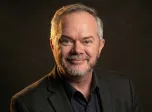
Dave Saunders is the founder of Base Reality Group and a Fractional CPO for product companies. He was a founder and operator at Galen Robotics, where the surgical-robotics platform earned FDA De Novo authorization in 2023, and he managed a 35-patent portfolio licensed from Johns Hopkins. He wrote Founders Who Finish and publishes The Build. More about Dave →