
The most important line in Aidoc’s announcement last week was not the word breakthrough. It was a quieter sentence further down: a radiologist still has to sign every report the AI drafts. That one design choice is what lets a generative model write radiology text at all, without triggering the kind of clinical trial that would push the product out by years. Aidoc framed it correctly. Most founders chasing the same headline will fixate on the wrong word.
What Aidoc actually got
On June 25, Aidoc said the FDA had granted Breakthrough Device Designation to First Read, a tool that drafts preliminary report text for more than 100 pre-specified findings on chest X-rays, with a radiologist signing off on every one. The company’s clinical AI platform already runs in more than 2,000 hospitals, and it raised $150 million in April to push models like this forward. MedTech Dive covered the designation.
Here is the part worth slowing down on. A designation is not a clearance. The breakthrough program moves a device to the front of the review queue and opens up more feedback from the agency along the way. To qualify, the device has to promise more effective diagnosis or treatment of a serious or life-threatening condition. That is a scheduling decision, not a verdict on the product. You still have to run the review and win it on the merits. Founders see breakthrough and hear validated. The FDA is only saying prioritized.
The sentence that does the regulatory work
Go back to the radiologist signing every report. That is not a usability footnote. It is the indication, and the indication is the whole game. A tool that drafts text for a radiologist to approve is a different product from one that reports findings on its own, even if the underlying model is identical. The first is an assistant inside the clinician’s existing workflow, judged on accuracy and usability with a human in the loop. The second claims to stand in for clinical judgment, which invites the expensive, outcome-driven evidence bar and the trial that comes with it.
I lived the cost of getting that choice wrong. At Galen we first framed our surgical robot as a telemanipulator, substantially equivalent to da Vinci. The FDA rejected it. We reframed the identical machine as a device that improved a surgeon’s access to anatomy at the end of a long instrument, and that version went through as a De Novo. Same hardware. The framing changed everything. Aidoc made its version of that call up front, and even the count of 100 pre-specified findings is part of it: bounded and named, not an open-ended promise to read the whole scan.
What this buys a founder building clinical AI
If you are building diagnostic AI, software as a medical device, or anything adjacent to clinical autonomy, the instinct to claim the biggest capability is the instinct that lands you in the slowest, most expensive review. “Our AI reads the scan” is a sentence that invites a trial. “Our AI drafts a read your radiologist signs” is a sentence that invites an engineering and usability file. Pick the second one, then carry it consistently through the deck, the indication, the study design, and the demo. A single document that drifts to the bigger claim can undo the framing.
The honest engineering read points the same way. The capability to actually replace the radiologist is not there yet, so selling autonomy is selling the Barnum version. Keep the human in the driver’s seat because the technology is not ready to take the wheel, and because that happens to be the same framing the agency will reward.
Dave’s take
What Aidoc earned here is product framing wearing a regulatory costume. They decided what the product is, a drafting assistant a radiologist signs, before they decided how to clear it, and the breakthrough program rewarded that discipline. When a founder asks me how to get an AI device through the FDA faster, the answer is almost never a different pathway. It is a narrower, more honest claim. Enhance the clinician, keep them in the driver’s seat, and most of the regulatory story writes itself.
From Dave’s video library
Dave on AI working behind the professional, where it raises the floor instead of replacing the judgment. Aidoc built its whole regulatory strategy on that same frame: a drafting assistant whose every output a radiologist signs.
I’m here to help you scale.
Work With DavePrefer a smaller first step? Book a $500 one-hour consultation →
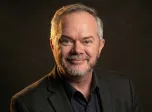
Dave Saunders is the founder of Base Reality Group and a Fractional CPO for product companies. He was a founder and operator at Galen Robotics, where the surgical-robotics platform earned FDA De Novo authorization in 2023, and he managed a 35-patent portfolio licensed from Johns Hopkins. He wrote Founders Who Finish and publishes The Build. More about Dave →