
A founder messaged me the morning the news broke, relieved. The FDA is staffing back up, he figured, so the backlog will clear and his submission will move faster. I get the instinct. I also think it is the wrong thing to bank on. At the BIO convention in late June, the agency said it is hiring around 2,200 people to refill the ranks it cut a year ago. That is good news for the FDA. It is not a number you get to put in your investor deck.
What the FDA actually said
At a town hall during the BIO International Convention on June 24, FDA officials walked through the rebuild. The agency is hiring roughly 2,200 staff after losing more than 3,000 to last year’s DOGE cuts. About 600 are onboarding now, a couple hundred have already started, and recent orientations have been bringing in several dozen people per pay period. Attrition at the drug center is back down to its historical norm. BioSpace reported the details from the convention floor. The honest way to read it is recovery in progress, not recovery finished.
Notice which parts of the agency were named: the drug and biologics centers. The device founders I work with answer to a different center entirely, so “the FDA is hiring” tells you almost nothing about who will read your specific submission, or how many reviews they will have under their belt when they do.
Why a bigger FDA does not speed up your review
Here is the part founders miss. Swapping out 3,000 experienced reviewers for 2,200 new ones is not a wash, and it is not quick. Institutional memory does not show up in an orientation packet. A reviewer who is three months in and unsure of the precedent tends to be more cautious, not less. They ask for more. They lean on the letter of the standard instead of judgment. The published backlog can shrink while your particular file draws a more conservative read than it would have two years ago.
So the staffing number is not a lever you control. What you do control is how strong your submission is before it reaches anyone, green or seasoned. That starts with treating the pre-submission meeting as the real event. A pre-sub is not a Q&A where you ask the FDA what to do. It is a strategy presentation. You assert your predicate, your indication, and your testing plan, and the agency signals back whether it agrees. “You may be better suited as a De Novo” is not a suggestion. It is an answer. Read it as policy and you spare yourself a rejected submission. Treat it as a hallway chat and a churning review staff will find every soft edge you left.
Plan for the reviewer you have not met
Even a clean pre-sub does not insulate you, and this is where my own scars are. On Galen’s path, the FDA reviewed our study design through a Q-sub and told us it was acceptable. Months later the substantive review team, different people with a different mandate, came after us over the fact that our data came from residents rather than attending surgeons, even though that same design had been blessed in the Q-sub. We re-ran a sixteen-subject cadaver study with attendings in two weeks, and we only pulled it off because Johns Hopkins’ neurosurgery department handed us a free operating room and cadaver heads. That kind of rescue does not exist without the relationships behind it. The lesson stuck: a yes from one reviewer does not bind the next one.
That is more true in a year when the agency is cycling through new staff, not less. The founders who clear a turbulent FDA are the ones who show up with a narrow indication, a De Novo safety story they wrote themselves, and a protocol built to survive a cold read by someone who was never in the room for the friendly conversation.
Dave’s take
I would not build a single week of runway on the FDA hiring back up. The recovery is real and I am glad to see it, but it is the agency’s project, not your strategy. The variable you own is the clarity of what you submit, and that has paid off in every staffing climate I have worked through, the fat years and the gutted ones. Control the file, and let the agency fix the agency.
From Dave’s video library
Dave on separating what a government shift actually changes from what it appears to change. The FDA hiring 2,200 people back is real recovery, and still not a strategy: the variable a founder owns is the clarity of the file they submit.
I’m here to help you scale.
Work With DavePrefer a smaller first step? Book a $500 one-hour consultation →
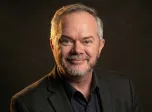
Dave Saunders is the founder of Base Reality Group and a Fractional CPO for product companies. He was a founder and operator at Galen Robotics, where the surgical-robotics platform earned FDA De Novo authorization in 2023, and he managed a 35-patent portfolio licensed from Johns Hopkins. He wrote Founders Who Finish and publishes The Build. More about Dave →