
Most physical-AI announcements are built so you cannot check them. A humanoid crosses a stage, lifts a block, and a press release tells you the future of labor has arrived. None of it is verifiable, and by the time anyone could verify it, the funding round has closed. So when Sanctuary AI published a number this week that a customer can check every day, I paid attention. Not because the robot is special. Because the claim is falsifiable.
What Sanctuary actually published
On June 17, Sanctuary AI, the Vancouver company best known for its humanoid, said it had hit a 99.5 percent success rate on a wire-plugging task at a Tier 1 automotive supplier, at a cycle time of 2.54 seconds. The task is the unglamorous kind that has kept robots off production lines for years: guide a flexible wire into a moving target on a live conveyor, where the material shifts in your grip as you handle it. The percentage matters less than the bar it was measured against. Sanctuary ran the task against the customer’s own live production benchmark, not a lab rig of its own design, and it did the work on existing industrial robot arms instead of waiting for its humanoid to be ready. Olivia Norton, the co-founder and chief technology officer, put the logic in one line: physical-AI adoption is gated by AI that meets both the performance and the cycle-time requirement. That is the whole game.
Why a number you can check is not a demo
I spend a lot of energy telling founders that most of what gets sold as AI is rebranded machine learning wrapped in P.T. Barnum showmanship. The tool is genuinely useful. The marketing around it is built to be unfalsifiable: too dangerous to release, most powerful model ever, claims shaped so nobody can check them before the news cycle moves on. My test on any of it is two questions. Can the specific claim be disproven, and has anyone outside the company actually checked it? A humanoid demo fails both. Sanctuary’s number passes both. There is a specific figure, tied to a named task, measured against a benchmark the customer already runs on its own floor. If it were wrong, the customer would know by lunch. That is the line between a product claim and a hype claim, and it has nothing to do with how impressive the robot looks on video.
Where this lands for hard-tech founders
If you are building anything physical, sit with the cycle-time point. A robot that does the task but runs slower than the worker it replaces is not a product. It is a science project with good PR. The number that decides whether you have a business is not your demo metric. It is your performance against the workflow the buyer runs today. Sanctuary made two calls that founders routinely get wrong. It picked a narrow, real, contact-rich task instead of a broad capability story, and it ran that task on hardware its customer could already buy and support instead of betting adoption on a brand-new platform. Both choices trade spectacle for a number someone can sign off on. If you cannot state your claim as a figure a customer could disprove against their own operation, you do not have validation yet. You have a demo, and demos do not close.
Dave’s take
The fastest way to tell whether a hard-tech company is real is to ask what number it will let an outsider check. The teams I watch stall are usually the ones still polishing the demo, because the demo is where they feel strongest and safest. Sanctuary did the harder thing. It got measured on someone else’s floor, against someone else’s benchmark, and published the result. Build the version of your product that survives that, and stop selling the version that only works in your own lab.
From Dave’s video library
Dave on turning your operation into one honest number an outsider can check. Sanctuary did the industrial version: measured on a customer's floor, against the customer's benchmark, with the result published.
I’m here to help you scale.
Work With DavePrefer a smaller first step? Book a $500 one-hour consultation →
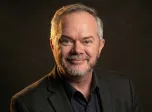
Dave Saunders is the founder of Base Reality Group and a Fractional CPO for product companies. He was a founder and operator at Galen Robotics, where the surgical-robotics platform earned FDA De Novo authorization in 2023, and he managed a 35-patent portfolio licensed from Johns Hopkins. He wrote Founders Who Finish and publishes The Build. More about Dave →