
The easy read on this spring is that the IPO window for climate tech swung back open. Fervo Energy, the enhanced-geothermal company, went public in mid-May at roughly a $12.4 billion market cap. X-energy, which builds small modular nuclear reactors, listed in April and its shares surged on the first day to a market value near $11.5 billion. Solv Energy, a solar and battery developer, went public in February at around $6 billion, per MIT Technology Review. Three multi-billion-dollar hard-tech listings in a single quarter, and the temptation is to file it under sentiment swinging back toward atoms. I think that read misses the actual mechanism. What carried these companies to the bell was not a friendlier market or a better technology. It was demand that had already been contracted before anyone rang it.
The Companies Going Public Already Had Their Customers
Look at who is standing behind each name. Google backs Fervo. Amazon owns roughly 20 percent of X-energy and is also one of its clients, per MIT Technology Review. These are not science projects priced off a roadmap and a TAM slide. They are companies whose largest strategic investors are also the buyers signing up to take the output, which is a very different posture to bring into a public offering. The hyperscalers are racing to secure electricity in an era of rising demand, much of it driven by data centers, and they are willing to anchor the supply side with both capital and offtake. For a founder building in energy, grid hardware, nuclear, or any category where the unit economics only close at industrial scale, that is the pattern worth studying. The listing is the visible event. The contracts that made it underwriteable were signed quarters earlier, out of view.
A Hot End-Market Is the Tailwind, Not the Proof
Rising electricity demand is real, and it helps. So does the political weather: geothermal and nuclear have kept federal support while renewables face headwinds under the current administration, per MIT Technology Review. But a hot end-market is not the same thing as demand for your specific machine, and conflating the two is how capital-intensive hardware companies talk themselves into raising against a story instead of a customer. The IPO-ready names did the harder thing. They converted a macro tailwind everyone can see into named buyers who had committed in writing. If you are a hardware founder watching this wave and reaching for the same narrative, the question is not whether the sector is hot. It is whether anyone has agreed to pay you for what comes off the line, at a price and volume that survive contact with your real cost structure.
A Multi-Billion Valuation Is the Next Bar, Not a Finish Line
There is a second lesson hiding inside the celebration, and it is the one I would press hardest on a founder reading these headlines. The number you print at an IPO, or at any round, becomes the number you then have to defend. Venture capital and public capital are both expensive money, and the post-money mark you accept today is the bar you have to clear at the next milestone. I watched Lucent go from $80 a share to about 52 cents, and the Ascend options I had converted into it, struck around $3, might as well have been worth zero. A multi-billion-dollar valuation is a claim about a future you still have to deliver, not a verdict on the present. Cheering the headline number while the deployment plan is mush is exactly how a company walks into a down round, and capital-intensive hardware gives you fewer cheap chances to recover than software ever did.
Dave’s take
For a capital-intensive hardware founder, the question this IPO wave should raise is not whether the window is open. It is who has already agreed to buy what you build, and whether you can defend the number you just printed when the next quarter or the next round arrives. Fervo and X-energy did not get public on a story. They got there on customers. Demand you can name beats a market you can merely describe, every single time.
From Dave’s video library
Dave on why polite interest proves nothing and a costly commitment proves everything. Fervo and X-energy went public on named customers and signed demand, which is the same proof at IPO scale.
I’m here to help you scale.
Work With DavePrefer a smaller first step? Book a $500 one-hour consultation →
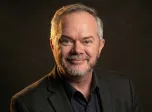
Dave Saunders is the founder of Base Reality Group and a Fractional CPO for product companies. He was a founder and operator at Galen Robotics, where the surgical-robotics platform earned FDA De Novo authorization in 2023, and he managed a 35-patent portfolio licensed from Johns Hopkins. He wrote Founders Who Finish and publishes The Build. More about Dave →