
Dr. Mohit Bhandari sat down at a portable robotic console in Perth, Australia on May 2 and performed a gastrojejunostomy on a patient in Indore, India, more than 4,500 miles away, using the SSi Mantra surgical robotic system and the SSi MantrAsana chair-based tele-surgeon console. The demonstration was staged at the Royal Australasian College of Surgeons Annual Scientific Congress and disclosed publicly on May 7. Three days earlier, on May 5, SS Innovations announced its installed base had crossed 10,500 cumulative procedures, including more than 500 cardiac operations, roughly 170 telesurgeries, and 125 pediatric cases, across more than 200 systems deployed in 11 countries since the system’s August 2022 commercial launch. On May 8, on a different layer of the interventional stack, BioCardia disclosed FDA alignment on two clearance pathways for its Helix Transendocardial Delivery Catheter following a Pre-Submission meeting. Read across the three disclosures, the structural lesson for surgical robotics and advanced interventional founders is consistent. Platform economics in this segment now run on the integrated stack of system, console, ultra-low-latency networking, and clinical evidence at commercial volume, and the regulatory posture for the cleared product is a function of how that stack was architected from the start.
The 4,500-Mile Telesurgery From Perth to Indore
Dr. Mohit Bhandari, President of IRCAD India, performed a robotic gastrojejunostomy on May 2 from Perth, Australia on a patient located more than 4,500 miles away in Indore, India, using the SSi Mantra surgical robotic system at the patient site and the SSi MantrAsana portable tele-surgeon console at the surgeon site. The procedure was staged at the Royal Australasian College of Surgeons Annual Scientific Congress and announced publicly on May 7. The MantrAsana is a chair-based, self-contained tele-surgeon console engineered for portability and a small physical footprint, designed to enable telesurgery from physician offices, satellite clinics, and other non-traditional surgical sites. SS Innovations characterized the console as engineered for real-time remote procedures through ultra-low-latency connectivity, high-definition visualization, and precise instrument control.
For surgical robotics founders, the structural read on the Perth-to-Indore demonstration is that the unit of competition for the next phase of platform economics is not the operating-room robot in isolation. The unit of competition is the integrated stack of patient-side robot, surgeon-side console (including portable form factors), network engineering for sustained ultra-low-latency operation across continents, regulatory authorization in both the patient and the surgeon jurisdictions, and the clinical evidence base at procedure volumes that demonstrate the stack works at scale rather than only at staged conferences. The companies that finish in this segment are the ones that designed each layer of that stack to interoperate from initial product architecture, not the ones that built the robot first and treated the network, console, and cross-border regulatory layers as integrations to engineer later.
10,500 Procedures and the Commercial-Scale Milestone
On May 5 SS Innovations announced its installed base had completed more than 10,500 cumulative procedures using the SSi Mantra system, including more than 500 cardiac operations, roughly 170 telesurgeries, and 125 pediatric surgeries. The company has trained approximately 2,100 physicians and deployed more than 200 systems across 11 countries since the SSi Mantra commercial launch in August 2022. CEO Dr. Sudhir Srivastava framed the milestone as a function of the system’s differentiated technical features, training accessibility, and cost profile, and emphasized the company’s mission to expand access to robotic surgical care globally.
The structural lesson in the 10,500-procedure number for surgical robotics founders is operational, and it sits underneath the headline. Reaching commercial volume that produces the procedure data the strategic-acquirer evaluation actually prices requires the installed base, the surgeon training pipeline, and the geographic deployment to compound together over the years between initial commercial launch and the first strategic conversation. SS Innovations spent the four years from August 2022 building out the deployment footprint, the training pipeline, and the procedure variety the installed base now produces, and the telesurgery milestone last week is a clinical disclosure the operational footprint underneath was already in place to support. Founders building toward a comparable milestone on a comparable timeline are running the operational build now, not after the cleared platform reaches its first commercial customers.
BioCardia Helix Pathway Alignment and the Interventional Regulatory Posture
On May 8 BioCardia disclosed the outcome of a Pre-Submission meeting with FDA on its Helix Transendocardial Delivery Catheter and reported that the agency raised no concerns on Helix safety data, device performance, or compatibility with general classes of agents. The agency aligned with BioCardia on two pathways to clearance for Helix. The first is a simultaneous approval pathway running with the CardiAMP cell therapy system, which BioCardia identified as the agency’s preferred route. The second is a De Novo pathway following a follow-on Pre-Submission meeting. The Helix catheter is an enabling delivery platform for minimally invasive, targeted intramyocardial delivery of therapeutic and diagnostic agents directly to heart tissue, with a helical needle architecture engineered to stabilize within the beating heart and to reach regions other delivery modalities cannot access reliably.
For advanced interventional founders, the BioCardia disclosure is the cleanest current example in the public record of what regulatory alignment looks like when the platform was architected as the delivery layer underneath a therapeutic stack rather than as a standalone catheter. The FDA aligned on two clearance pathways, raised no concerns on the safety or performance data, and identified the simultaneous approval pathway with the therapeutic system as the preferred route, which is the regulatory posture a delivery platform earns when the safety and performance evidence base was generated in the studies the therapeutic agents were already running. The platforms that arrive at the Pre-Submission meeting with the agency’s preferred pathway already on the table are the platforms whose evidence architecture and regulatory strategy were designed alongside the engineering work, not after.
What the Telesurgery Milestone Means for the Founder Operating Plan
Read together, the three disclosures describe the operating discipline that produces both the clinical milestone and the regulatory posture that strategic acquirers and clinical adopters in 2026 are pricing. SS Innovations produced a 4,500-mile cross-border telesurgery on a system architecture that designed the patient-side robot, the portable surgeon-side console, the ultra-low-latency network engineering, and the cross-border deployment footprint as one integrated stack, on an installed base that compounded to 10,500 procedures over four commercial years. BioCardia produced FDA alignment on the agency’s preferred clearance pathway on a Pre-Submission meeting where the safety and performance evidence already supported the simultaneous approval route. Both outcomes depended on architectural decisions made years earlier in the product, evidence, and regulatory strategy, not on integrations engineered after the platform was already in commercial use.
For founders building advanced interventional and surgical robotics platforms in 2026, the operating plan question is which architectural decisions need to be made now to produce a comparable milestone in three to four years. The companies that finish in this environment design the integrated platform stack from initial product architecture, fund the operational build of the installed base and the training pipeline alongside the engineering work, and run the regulatory and evidence strategy to land the agency’s preferred pathway at the first Pre-Submission meeting rather than the second or third. The work is harder during the build phase because the architectural decisions compete for time and capital with the visible engineering progress that produces the next financing round. The compensation arrives at the moment a clinical milestone, a regulatory milestone, or a strategic conversation depends on the architecture, and the architecture has to already be in place for the milestone to land.
Dave’s take
The Perth-to-Indore demonstration is a clinical disclosure on a network and platform architecture that was designed years earlier to operate at intercontinental distance with ultra-low-latency control. The 10,500-procedure number is an operational disclosure on a deployment and training footprint that compounded over four commercial years. The BioCardia FDA alignment is a regulatory disclosure on an evidence architecture that was designed to land the agency’s preferred pathway. Each of the three is the visible result of architectural work the company did in the build years before the milestone landed. The founders I am working with this quarter are running the same exercise on their own platforms. Which architectural decisions sitting in front of you now produce the milestone three years from today, and which ones produce a slower path to the same outcome?
From Dave’s video library
Dave on why the unscalable, compounding work matters most right after early wins. A telesurgery demo across 4,500 miles reads as a moment, but it sits on four years of deployment and training work that never made headlines.
I’m here to help you scale.
Work With DavePrefer a smaller first step? Book a $500 one-hour consultation →
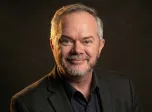
Dave Saunders is the founder of Base Reality Group and a Fractional CPO for product companies. He was a founder and operator at Galen Robotics, where the surgical-robotics platform earned FDA De Novo authorization in 2023, and he managed a 35-patent portfolio licensed from Johns Hopkins. He wrote Founders Who Finish and publishes The Build. More about Dave →