
Olympus announced on May 4 a global distribution agreement with South Korea-based EndoRobotics, taking the Robopera console, articulated grippers, scope-mounted traction device, and EndoCubot ESD training simulator into Olympus’ EndoTherapy commercial channel and beginning the rollout in the U.S. The deal arrives ten months after Olympus and Revival Healthcare Capital launched Swan EndoSurgical with up to $458 million in committed capital and an Olympus acquisition option, which means the company is now running a parallel build-and-buy strategy for robotic GI alongside the new license-and-distribute path. The same week brought late-breaking pulsed field ablation data at HRS 2026 in Chicago that shifted the share question between Boston Scientific, Medtronic, and Abbott, an Abbott AI-enabled imaging clearance that drove 9.5% comparable sales growth in vascular technologies, and a Medtronic Mosaic Neo mitral replacement clearance with the first robotic-assisted implantations already complete. Read across the four, the surgical robotics and interventional commercialization map is widening, and OEM distribution is now a real third path alongside acquisition and direct field force.
Olympus Signs EndoRobotics for Robopera ESD Platform Distribution
Olympus and EndoRobotics announced an exclusive global distribution agreement covering the Robopera robot-assisted system, the articulated grippers, the scope-mounted traction device, and the EndoCubot training simulator, with the rollout beginning in the United States as part of Olympus’ EndoTherapy portfolio. The clinical target is endoscopic submucosal dissection for early-stage GI cancers and precancerous lesions, where Olympus already owns the dominant flexible endoscopy installed base and the third-space endoscopy training pipeline. EndoRobotics is a South Korea-based developer of robotic devices for the GI tract, and Mike Callaghan, general manager of EndoTherapy at Olympus, said the partnership is intended to help clinicians perform complex therapeutic procedures with greater confidence.
The deal is a meaningful structural signal because Olympus is running it in parallel with the Swan EndoSurgical platform that Olympus and Revival Healthcare Capital launched in July 2025, with up to $458 million committed and an Olympus acquisition option attached to the spinout’s development milestones. The combined message to the surgical robotics and interventional ecosystem is that the largest flexible endoscopy OEM in the world is willing to distribute external robotic platforms while it continues building its own, and that the access pathway for a startup with a credible robotic GI product is now an exclusive commercial relationship with the channel that already owns the procedural environment, rather than a head-to-head sales war against the incumbent.
HRS 2026 Late-Breakers Reset the Pulsed Field Ablation Share Question
The Heart Rhythm Society annual meeting in Chicago produced new clinical evidence across the three competitors driving the $16 billion electrophysiology market into PFA-led growth. Boston Scientific’s AVANT GUARD trial, published in the New England Journal of Medicine and presented at the meeting, showed Farawave delivering 56% primary effectiveness in 440 persistent atrial fibrillation patients at 12 months versus 30% on drug therapy, with a 5.1% major adverse event rate and the deaths reported as procedure-unrelated. Boston Scientific is positioning the data as support for a first-line indication expansion that the company believes opens a $1 billion market by 2028. Abbott reported 87% arrhythmia-free survival at six months from its 188-patient FlexPulse trial of the TactiFlex Duo dual-energy catheter, with a 98.3% safety profile and 93.3% of patients treated entirely on the PFA component. Medtronic disclosed Sphere-9 early feasibility data showing 65.5% freedom from ventricular tachycardia recurrence at six months, with the FDA having granted breakthrough designation and the pivotal U.S. trial approved.
The competitive read is that PFA is no longer a category in which any single platform owns the procedural workflow, and the share question is going to be settled across multiple indications and dual-energy combinations during 2026 and 2027. For founders building in the broader cardiac ablation, mapping, and access ecosystem, the implication is that the procedural workflow surrounding PFA is being rebuilt in real time, and the components that integrate cleanly into the new generation of ablation suites have a measurable commercial window that they did not have when the workflow was still organized around radiofrequency thermal ablation alone.
Abbott AI-Enabled Imaging Clearance Drives Vascular Tech Growth
Abbott obtained both FDA approval and a CE mark for an artificial intelligence-enabled imaging device, and the company linked the clearance to 9.5% comparable sales growth in its vascular technologies segment during the first quarter, according to MedTech Dive coverage of the May 4 disclosures. The clearance falls into the AI lifecycle management territory that the FDA device center has been working through advisory committee guidance to formalize during 2026, and it is one of a growing number of AI-enabled clearances the agency is now processing alongside the device backlog driven by FDA staffing changes earlier in the year.
The signal for surgical robotics and interventional founders is that AI-enabled imaging is now contributing measurable top-line growth at the strategic-acquirer scale, and the platform companies are pricing the AI-imaging asset pipeline as a primary commercial driver rather than as a supplemental software layer. Founders building AI imaging components for image-guided intervention should be reading the Abbott disclosure as evidence that the strategic interest is real, that the FDA pathway is open for clearances of comparable scope, and that the strategic acquirers have an active purchase appetite for assets that integrate into their existing vascular and cardiology platforms.
Medtronic Mosaic Neo Mitral Valve Clearance With Robotic-Assisted Cases
Medtronic received FDA clearance on April 29 for an updated Mosaic Neo mitral replacement valve, and the company disclosed that initial robotic-assisted implantations had already been completed across U.S. centers as part of the launch. The clearance broadens the Medtronic structural heart portfolio in mitral surgery and confirms the company’s continued investment in the valve replacement category alongside the Hugo robotic-assisted surgery system rollout, which performed its first U.S. case at Cleveland Clinic in February. The robotic-assisted mitral implantation flag in the launch communications is the company drawing the connection between the structural heart asset base and the soft-tissue robotic platform that will eventually support more of those cases.
For founders building in the structural heart, cardiac surgery, and surgical robotics adjacencies, the implication is that the strategic acquirers are now thinking about valve assets and robotic platforms as a single integrated commercial story, and the integration question is going to drive the next round of strategic interest in the cardiac robotic ecosystem. The Teleflex CEO appointment on April 30 of Jason Weidman, a 20-year Medtronic veteran, fits the same pattern, with the company restructuring its product portfolio under leadership that has the strategic-acquirer playbook in its operating background.
What the Distribution Path Changes for Surgical Robotics Founders
Three operational shifts follow from this week. The first is that strategic OEM distribution is now a real commercialization path for surgical robotics and interventional device startups, and the Olympus-EndoRobotics structure of an exclusive global distribution agreement with the channel that already owns the procedural environment is the model that founders should be evaluating against the cost and timeline of building their own field force. The second is that the procedural workflow around pulsed field ablation is being rebuilt across 2026 and 2027, and the components that fit the new generation of ablation suites have a measurable window that disappears once the new workflow is locked in. The third is that the strategic acquirers are integrating AI imaging, structural heart, and robotic-assisted surgical platforms as a single commercial story, and the founders building components that fit cleanly into that integrated story have a different conversation with the strategic-acquirer ecosystem than the founders building standalone point solutions.
Dave’s take
The Olympus-EndoRobotics deal is the clearest 2026 example of strategic distribution as a third commercialization path for surgical robotics, alongside the two paths most founders already model for. The companies I work with should be running the structural diligence on which incumbents already own the procedural environment they are trying to enter, and which of those incumbents have a known appetite for license-and-distribute relationships rather than a build-or-buy posture. That diligence work belongs in the commercialization plan from initial product architecture, not after the FDA clearance arrives and the field-force budget is the only path the company can fund.
From Dave’s video library
Dave on the distribution problem behind every good product nobody has heard of. The Olympus deal is the industrial-scale version: EndoRobotics built the robot, and Olympus already owns the rooms it needs to enter.
I’m here to help you scale.
Work With DavePrefer a smaller first step? Book a $500 one-hour consultation →
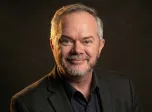
Dave Saunders is the founder of Base Reality Group and a Fractional CPO for product companies. He was a founder and operator at Galen Robotics, where the surgical-robotics platform earned FDA De Novo authorization in 2023, and he managed a 35-patent portfolio licensed from Johns Hopkins. He wrote Founders Who Finish and publishes The Build. More about Dave →