
Medtronic announced CE Mark for the Stealth AXiS surgical system on April 28, clearing the platform for spine and cranial procedures across the European Union and the broader CE-accepting markets. Five days earlier, three spine surgeons at HCA Virginia’s Reston Hospital Center performed the first U.S. surgeries using the cleared Stealth AXiS Autopilot system, completing a staged direct lateral interbody fusion and a three-level posterior instrumented spinal fusion. The two milestones together close out the launch sequence for the first surgical platform that integrates AI-powered planning, intraoperative navigation, segmental tracking, and robotic guidance into one product, and they land in the same quarter that Intuitive Surgical lifted full-year da Vinci procedure growth guidance and CMR Surgical filed a 510(k) to add gynecology to Versius Plus. The pattern across the three is the same. Integrated platforms that bundle planning, navigation, AI, and robotic delivery are now the unit of competition in surgical robotics, and the standalone-robot frame is being retired.
Stealth AXiS Closes Out the Global Launch Sequence in Six Weeks
Medtronic received CE Mark for Stealth AXiS on April 28, with the certification covering both spine and cranial procedures and authorizing commercial launch into the European Union and other CE-accepting markets. The CE Mark sequenced behind FDA spine clearance in February and FDA cranial and ENT clearance in March, completing a six-week run from initial U.S. authorization to global commercial readiness. Medtronic disclosed a partnership with GE HealthCare to integrate the platform with intraoperative ultrasound, which extends the integrated-imaging story already built around StealthStation navigation and Mazor robotics. The system also includes LiveAlign segmental tracking, which Medtronic describes as the first capability to visualize anatomic motion and patient alignment in real time during spine procedures without repeat imaging.
On April 23, three spine surgeons at HCA Virginia’s Reston Hospital Center performed the first surgeries using the cleared U.S. Autopilot system, treating a single patient through a staged direct lateral interbody fusion and a three-level posterior instrumented spinal fusion with bilateral SI joint fusion. The clinical milestone matters less for the procedural detail than for the operating-cadence signal it sends. The platform reached commercial readiness, scheduled the first surgeons, completed the first cases, and produced the case report inside ten weeks of FDA clearance. That is the operational tempo competitors are now being measured against.
Intuitive Lifted 2026 Procedure Guidance on da Vinci 5 Mix Shift
Intuitive Surgical reported Q1 2026 results on April 22 with worldwide revenue of $2.77 billion, up 23% year over year, and lifted full-year da Vinci procedure growth guidance to a range of 13.5% to 15.5%, up from 13% to 15% prior. Total da Vinci procedures grew 16% in Q1 and Ion procedures grew 39%. The company placed 431 da Vinci surgical systems in the quarter against 367 a year earlier, with da Vinci 5 placements at 232 against 147, indicating a continued mix shift toward the integrated next-generation platform. CEO Dave Rosa attributed U.S. momentum to a 31% rise in after-hours procedures and higher overall utilization, both of which depend on the platform-level workflow features that differentiate da Vinci 5 from its predecessor and from competing standalone systems.
The strategic read for surgical robotics founders is that Intuitive’s pricing power and procedure growth in 2026 are being driven by the integrated platform, not by any single instrument or capability. The customers paying the premium for da Vinci 5 are paying for the integrated workflow, not for the robot in isolation. Competitors trying to displace Intuitive on price or on a single feature continue to lose ground, while competitors fielding their own integrated-platform answers are the ones building durable market positions.
CMR Surgical Builds the Versius Plus Indication Stack Ahead of U.S. Launch
CMR Surgical filed a 510(k) on April 29 to add benign gynecology indications to Versius Plus, ten days after the cholecystectomy clearance and two months after the U.S. debut at the Society of American Gastrointestinal and Endoscopic Surgeons annual meeting in Tampa. The company has crossed 45,000 procedures globally on the Versius platform across more than 30 countries, with the digital analytics suite rolling out across Europe ahead of the major U.S. push later in 2026. The Versius Plus story is the indication-stack version of the integrated-platform story. CMR is building the platform breadth that lets a hospital justify a system purchase against a multi-specialty caseload, not against a single procedure economics case.
The European Commission, EMA, and Medical Device Coordination Group launched the Breakthrough Medical Device Pilot on April 28, providing manufacturers of highly innovative platforms with priority scientific advice and a streamlined path to clinical validation. The pilot is sized for the integrated-platform players that need to run multi-specialty clinical programs and indication stacks in parallel with launch, and it lands at the same moment that the integrated-platform competitive frame is consolidating across the U.S. and European markets.
What the Integrated-Platform Frame Changes for Surgical Robotics Founders
Three operational shifts follow from this week’s milestones. The first is that the unit of competition has become an integrated platform that bundles planning, intraoperative navigation, segmental tracking, AI-driven workflow, and robotic delivery into a single product. A surgical robotics startup that ships a strong robotic motion platform without the surrounding planning, navigation, and AI workflow story is competing into a market where the leaders are selling something fundamentally larger. The second is that integrated-imaging partnerships, of the kind Medtronic announced with GE HealthCare and Intuitive has been building inside da Vinci 5, are now part of the platform spec rather than a future enhancement. The third is that indication breadth, of the kind CMR is building on Versius Plus, is now what justifies the capital commitment a hospital makes to the platform, and a single-indication launch strategy without a clear indication-stack roadmap will struggle to land the first deployments.
Founders building surgical robotics platforms in 2026 should be reading the Stealth AXiS launch sequence as the new reference for what global commercial readiness looks like, the Intuitive Q1 report as the evidence that integrated-platform pricing power is durable, and the CMR Versius Plus indication stack as the model for how a multi-specialty platform earns the hospital purchase decision. The strategic question for the founders I work with has become what the smallest credible integrated platform looks like for their specialty, and how fast they can get to it.
Dave’s take
The Stealth AXiS launch sequence is the cleanest example I have seen of what the integrated-platform competitive frame looks like in practice, and the pace from FDA clearance to first surgeries to CE Mark is what every surgical robotics founder should be planning against. If you are building a robot without a planning, navigation, and AI workflow story, you are building into a market where the leaders are selling something fundamentally larger and the customers are paying for the difference. Build the smallest credible integrated platform for your specialty, build it from initial product architecture, and stop pretending the differentiation can be added in a later release.
From Dave’s video library
Dave on the AI he actually runs his business on and where each workflow breaks. The Stealth AXiS launch sequence shows what it looks like when AI stops being a feature and becomes the workflow itself.
I’m here to help you scale.
Work With DavePrefer a smaller first step? Book a $500 one-hour consultation →
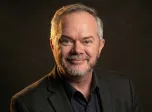
Dave Saunders is the founder of Base Reality Group and a Fractional CPO for product companies. He was a founder and operator at Galen Robotics, where the surgical-robotics platform earned FDA De Novo authorization in 2023, and he managed a 35-patent portfolio licensed from Johns Hopkins. He wrote Founders Who Finish and publishes The Build. More about Dave →