
The Global Multi-Specialty Robotic Surgery Conference in New Delhi this week drew more than 1,600 attendees from 19 nations and became the platform for SS Innovations to unveil a range of next-generation concepts: drone-deployed battlefield surgery, a zero-footprint mobile operating room, and an AI-integrated humanoid surgical robot still in early conceptual development. Separately, AcuityMD closed an $80 million Series C at a $955 million valuation, and the European Medicines Agency launched a new Breakthrough Device pilot that mirrors the FDA designation pathway for the first time.
What SS Innovations' SMRSC 2026 Showcase Tells Founders About the Platform Roadmap
SS Innovations used the Global Multi-Specialty Robotic Surgery Conference in New Delhi to present four distinct platform concepts alongside its commercially operating SSi Mantra system, which ran ten live telesurgeries during the event, according to a press release from SS Innovations. The concepts ranged from the SSi Vimana, a miniature drone-mounted robotic system designed for battlefield trauma surgery, to the SSi Operion, a fully mobile operating room with overhead-integrated robotics designed for deployment in hospitals, remote locations, and military settings.
The SSi Avtara humanoid surgical robot is the furthest from market, described by the company as a conceptual platform for AI-integrated mobility and real-time sensing across healthcare and defense environments. The single-arm robotic assist carts for endoscopy and ultrasound positioning are the most grounded in near-term clinical reality, currently in early validation in India.
What matters for founders is not the distance between any of these concepts and commercial reality. It is what the range tells you about where the form factor question is heading. The surgical robotics market has operated for most of its commercial history on the assumption that the reference architecture is a fixed, multi-arm system in a hospital OR. SMRSC 2026 is one more data point in a growing body of evidence that this assumption is unwinding. Mobile ORs, single-use endovascular robots, ASC-focused platforms, and drone-deployed systems are all being developed concurrently, and the hospital OR is no longer the only integration environment that matters. Founders building enabling technology, instruments, or workflow software who have architected their integration around a single platform in a single setting are carrying more dependency risk than the market as it currently stands actually requires.
AcuityMD Raises $80 Million for AI-Powered Commercial Intelligence in MedTech
AcuityMD closed an $80 million Series C led by StepStone Group, with participation from Benchmark, Redpoint Ventures, ICONIQ, and Atreides Management, according to a company announcement on April 21, 2026, via Business Wire. The round brings total funding past $160 million and values the company at $955 million. AcuityMD consolidates fragmented claims data, FDA filings, and government records into a unified knowledge graph that commercial teams at MedTech companies use to identify market opportunities and target accounts. The platform now serves 16 of the top 20 MedTech companies and has identified more than $34 billion in pipeline opportunity for its customers.
The $955 million valuation on $160 million total raised is a signal worth examining. The data problem in MedTech commercial operations is real and persistent. Clinical outcomes data, account-level procedure volume, physician specialization, and FDA clearance histories exist in fragmented, hard-to-query formats across dozens of different government and commercial databases. AcuityMD has spent years building the infrastructure to stitch those sources together into something a commercial team can actually use. The round suggests that solving that data problem at scale has real strategic value to the large companies that would otherwise be building it themselves.
For early-stage founders, the relevant implication is less about competitive threat and more about baseline expectations. The large companies your sales team will be negotiating against at the account level are using AI-powered commercial intelligence to understand your target accounts as well as or better than you do. Your commercial readiness plan needs to account for that asymmetry.
EMA Launches Breakthrough Device Pilot as EU Regulatory Pathways Evolve
The European Medicines Agency held an information session on April 24, 2026, announcing a new pilot program for Breakthrough Medical Devices that mirrors the FDA's Breakthrough Device Designation, according to Healthcare Digital. The program will offer manufacturers of highly innovative devices priority scientific advice and a streamlined regulatory route. Categories named specifically include neuro-implants and robotic platforms.
The FDA Breakthrough pathway has measurably compressed timelines for qualifying devices in the US. If the EMA pilot develops with comparable effect, it changes the sequencing calculation for founders who have historically treated CE marking as the slower but more predictable path. The detail to watch is what the EMA defines as qualifying criteria for the designation and whether the scientific advice process translates into the kind of pre-submission engagement that has made the FDA Breakthrough pathway valuable in practice. The pilot announcement tells you the intent; the outcomes over the next twelve to eighteen months will tell you the execution.
J&J MedTech Launches Next-Generation Pulsed Field Ablation System in Europe
Johnson & Johnson announced the European launch of its VARIPULSE Pro3 pulsed field ablation platform at the Heart Rhythm Society meeting in late April 2026, per Healthcare Digital. The system is designed for atrial fibrillation treatment and offers claimed workflow improvements over existing thermal ablation methods. The launch follows Medtronic’s $100 million investment in Pulnovo Medical’s competing PFA technology announced on April 21, 2026.
The PFA market has now crossed into multi-platform competitive territory faster than most procedural device categories do. For founders building tools adjacent to EP labs, the practical consequence is that the account relationships available in the cardiac electrophysiology setting are becoming more complex. Early-adopter accounts that built their program around the first cleared PFA system are now being approached by multiple platform vendors. The ecosystem relationships those accounts formed with early-stage companies have real value and real fragility at the moment when the platform choices are actively being re-evaluated.
Dave’s take
The SMRSC conference is worth paying attention to because it shows what the platform roadmap looks like several generations out. The companies showing drone-deployed surgery and mobile ORs alongside their commercial systems are telling you something about where they expect the care delivery environment to go, and that changes which integration points are stable across form factors and which ones are specific to the current hospital OR architecture. The AcuityMD round is a separate signal I would not ignore: when a platform serving the majority of the top MedTech companies raises near a $1 billion valuation, the commercial data problem has graduated from niche tool to competitive infrastructure, and founders building commercial plans without that layer are at a structural disadvantage.
From Dave’s video library
Dave on Barnum's playbook and how to tell showmanship from substance, with intent as the divider. Drone surgery and humanoid robots on a conference stage are exactly the kind of claims that test was built for.
I’m here to help you scale.
Work With DavePrefer a smaller first step? Book a $500 one-hour consultation →
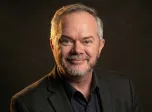
Dave Saunders is the founder of Base Reality Group and a Fractional CPO for product companies. He was a founder and operator at Galen Robotics, where the surgical-robotics platform earned FDA De Novo authorization in 2023, and he managed a 35-patent portfolio licensed from Johns Hopkins. He wrote Founders Who Finish and publishes The Build. More about Dave →