
CMR Surgical's CEO Massimiliano Colella made a decision that most investors would have resisted: in his first week on the job, he stopped the company's US launch rather than let it proceed with the original Versius system. His reason was direct. In a market where hospitals make decade-long technology commitments, there is no room for a disappointing first impression. The decision to wait for Versius Plus, and the principles behind it, are worth examining for any founder planning a market entry in a high-stakes regulated sector.
CMR Surgical Delays US Entry to Launch the Right Product
According to reporting from MedTech Dive, CMR Surgical CEO Massimiliano Colella made the decision to halt the planned US launch within days of taking the role, choosing to wait until the Versius Plus system was ready. He described the market environment as one where the company could not afford a single mistake. The Versius Plus system, which received FDA clearance in late 2025, brings new surgical instruments, enhanced visualization, improved data tracking, and greater system efficiencies over the original generation. Most of those improvements can be deployed to existing units through software updates.
The delay was not a regulatory setback. It was a strategic choice to control the narrative of first contact with US hospital systems. CMR has treated more than 45,000 patients worldwide across more than 30 countries on Versius robots, and the company has raised nearly $1.5 billion in venture funding. It had the resources to wait. What Colella assessed was whether the original product was the right one to launch with in a market that would remember the first impression.
Why the US Surgical Robotics Market Punishes Weak Launches
The US hospital technology procurement cycle is structured in ways that make first impressions durable. Purchasing decisions involve clinical champions, OR leadership, supply chain, and finance. Once a hospital commits capital to a platform, the evaluation calculus shifts: the burden of proof moves to any competitor attempting to displace it. Relationships with Intuitive Surgical's training, service, and clinical support organizations run deep at institutions with installed da Vinci systems.
CMR's positioning strategy leans into this reality rather than against it. Colella has described Versius as complementary to what hospitals already have, not as a displacement play at the top of the market. The modular, portable design allows hospitals to rotate a single unit across multiple operating rooms. For an institution that has resisted a multi-million-dollar fixed platform commitment, this is a materially different evaluation conversation.
The MassDevice Surgical Robotics Special Report for 2026 identifies new sites of care, specifically ambulatory surgery centers and hospitals without any existing robotics program, as the biggest area of market differentiation this year. CMR, alongside Distalmotion, Moon Surgical, and Virtual Incision, is targeting these greenfield accounts rather than attempting to dislodge Intuitive at its core accounts.
GE HealthCare and Medtronic Integrate Intraoperative Imaging with Navigation
GE HealthCare and Medtronic announced integration of the bkActiv intraoperative ultrasound system with the Stealth AXiS surgical navigation and robotic platform, according to MassDevice reporting. The integration connects real-time imaging with surgical navigation for procedures performed on the Stealth AXiS system, which received back-to-back FDA clearances in early 2026 for spine, cranial, and ENT procedures.
For founders building imaging, navigation, or data infrastructure that touches robotic workflows, partnerships of this kind signal where the integration surface area is expanding. Large platform developers are actively seeking imaging and sensing capabilities to differentiate their systems. That creates an acquisition and partnership environment that rewards companies with demonstrated clinical evidence and production-ready integrations.
Two Tiers of Competition Are Solidifying
The surgical robotics competitive landscape in 2026 has effectively split into two tiers. Johnson & Johnson and Medtronic are pursuing soft tissue procedure volume at established hospital accounts, going directly after Intuitive's installed base with comparable large-platform systems. CMR, Distalmotion, Moon Surgical, and Virtual Incision are building access at institutions and care settings Intuitive has not reached.
These tiers have different implications for founders building adjacent technology. An enabling device or software platform built for the top-tier hospital accounts needs to navigate a procurement process that involves major capital commitments and entrenched relationships. A product built for ASCs and greenfield hospitals is operating in a lower-inertia environment where first-mover positioning and clinical evidence can move faster. Understanding which tier your target customers operate in is part of the strategy.
Dave’s take
The CMR story is really a story about what it costs to be wrong at launch in a market that does not give you a second first impression. Colella walked in and stopped a launch that the organization had momentum behind. That is a hard decision to make under investor pressure and org-wide expectation. The fact that he made it tells you something about how seriously the company is taking long-term account relationships over short-term revenue timing. I see founders face this same pressure constantly: ship now and fix it later, or hold until the product is actually ready. In regulated markets with long sales cycles, the cost of shipping early is not just one bad customer. It is a reference that follows you into the next ten conversations.
From Dave’s video library
Dave on why the build clock is not the real clock, and why the only proof that counts is external. CMR stopping its own US launch to wait for a better product is the same discipline: ready is negotiable forever, proof is not.
I’m here to help you scale.
Work With DavePrefer a smaller first step? Book a $500 one-hour consultation →
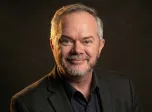
Dave Saunders is the founder of Base Reality Group and a Fractional CPO for product companies. He was a founder and operator at Galen Robotics, where the surgical-robotics platform earned FDA De Novo authorization in 2023, and he managed a 35-patent portfolio licensed from Johns Hopkins. He wrote Founders Who Finish and publishes The Build. More about Dave →